Case study
CareEasy
Determining the future direction of the CareEasy app
The Challenge
CareEasy was at the MVP stage, and was looking to build beyond its core functionality.
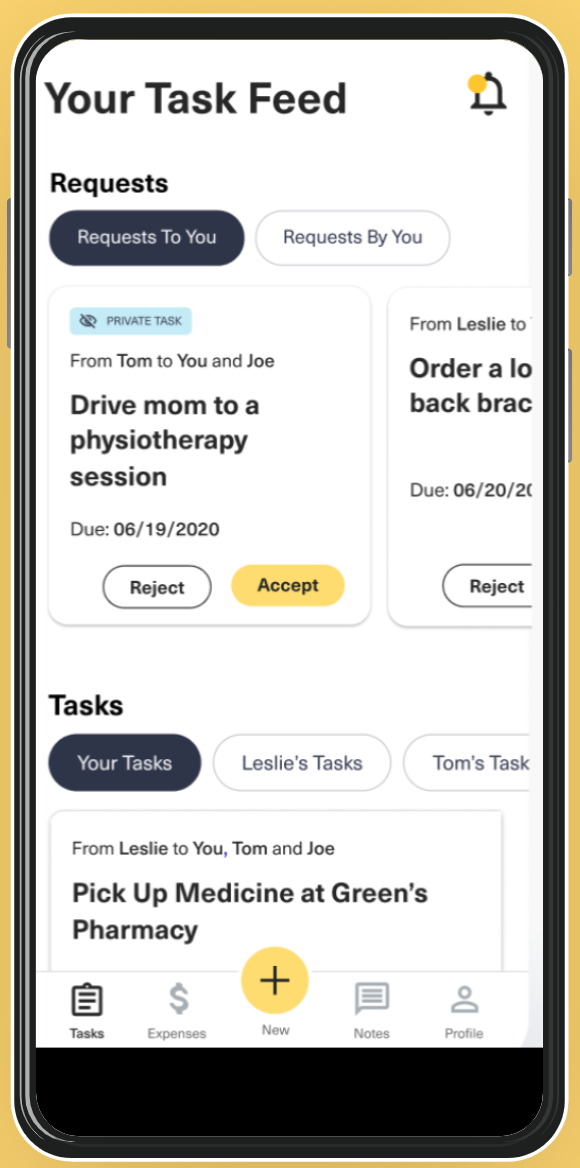
CareEasy is a care coordination app that a group of caregivers can use to coordinate different tasks and manage expenses when taking care of a loved one that needs regular care. Although the core functionality of the app was shown to be valuable, the team was looking to validate their product roadmap to make sure what they were developing would be useful in Phase 2 of the product launch.
Audience
The main users of CareEasy are caregivers who are taking care of seniors. These users tend to be aged 40–60, and have a broad range of tech savviness. These individuals are often considered the sandwich generation, having to take care of both their children and senior parents while also working full-time jobs.
Planning Phase
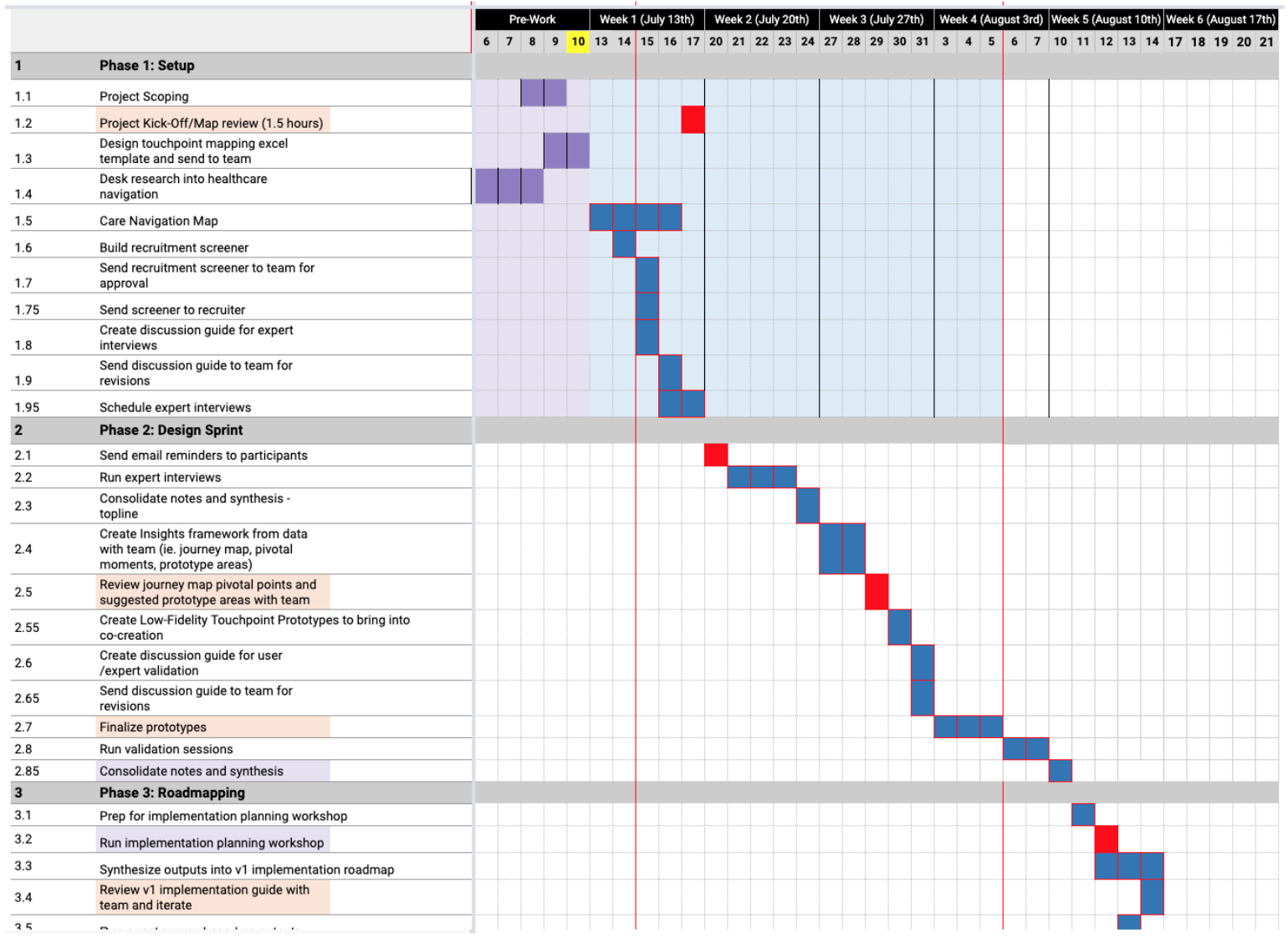
A meticulous research plan was developed for a tight deadline.
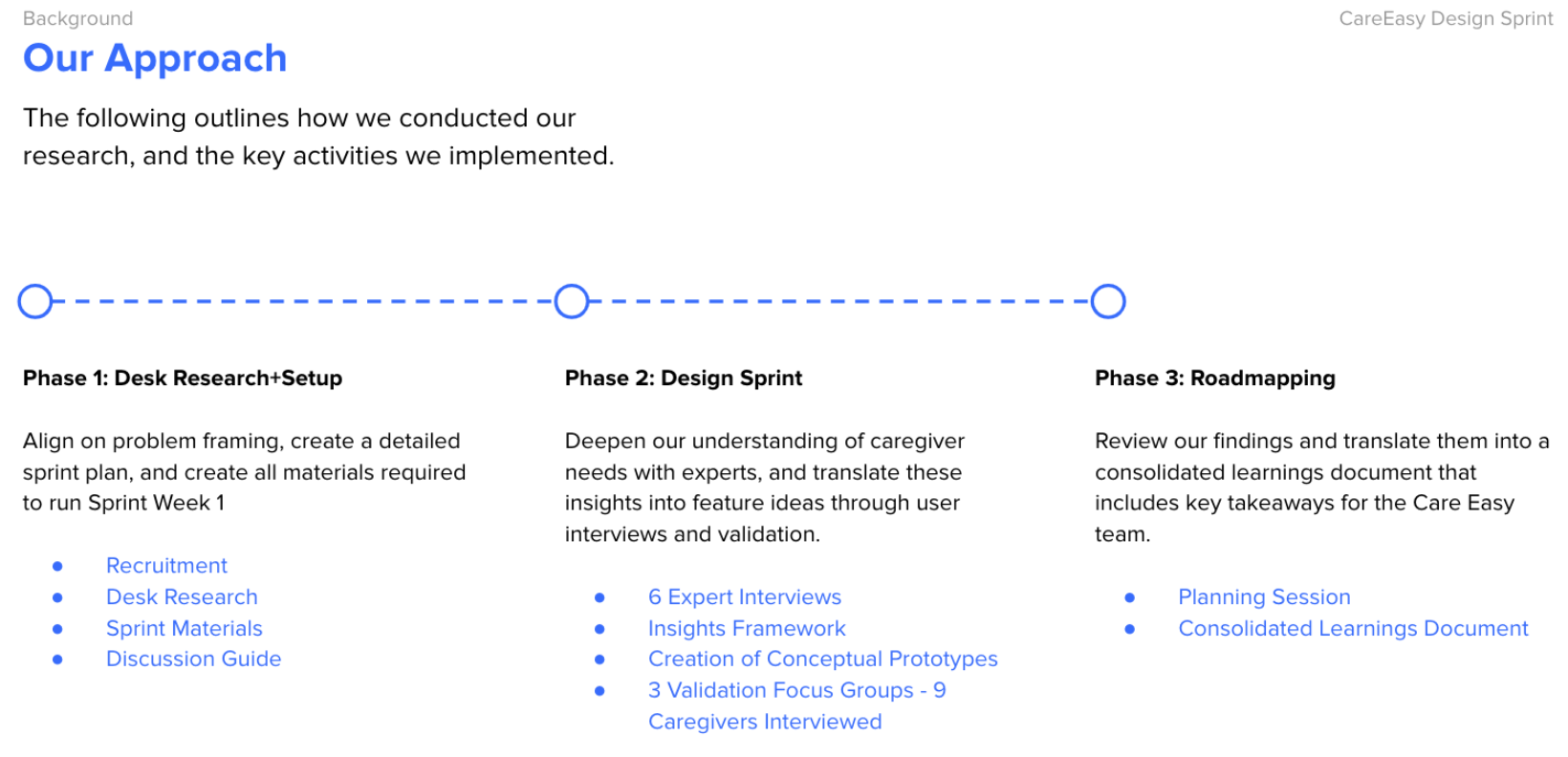
The CareEasy team needed to validate their product roadmap in a tight 6-week time frame. We had a number of different phases we needed to go through, and so I needed to make sure everything was scheduled well in advance.
Major tasks within the plan:
- Desk Research
- Expert Interviews
- Prototyping and Design Workshop
- Prototype Validation Focus Groups
- Final Deliverables
Desk Research
It was important to become familiar with the caregiver space.
The CareEasy team had a wealth of knowledge about the caregiver space, which was what inspired the development of the app. I, on the other hand, was not familiar with the space, and was not sure that the team had covered all their bases. Therefore, the first step was to research the space and then align with the team on the learnings.
Key Takeaways
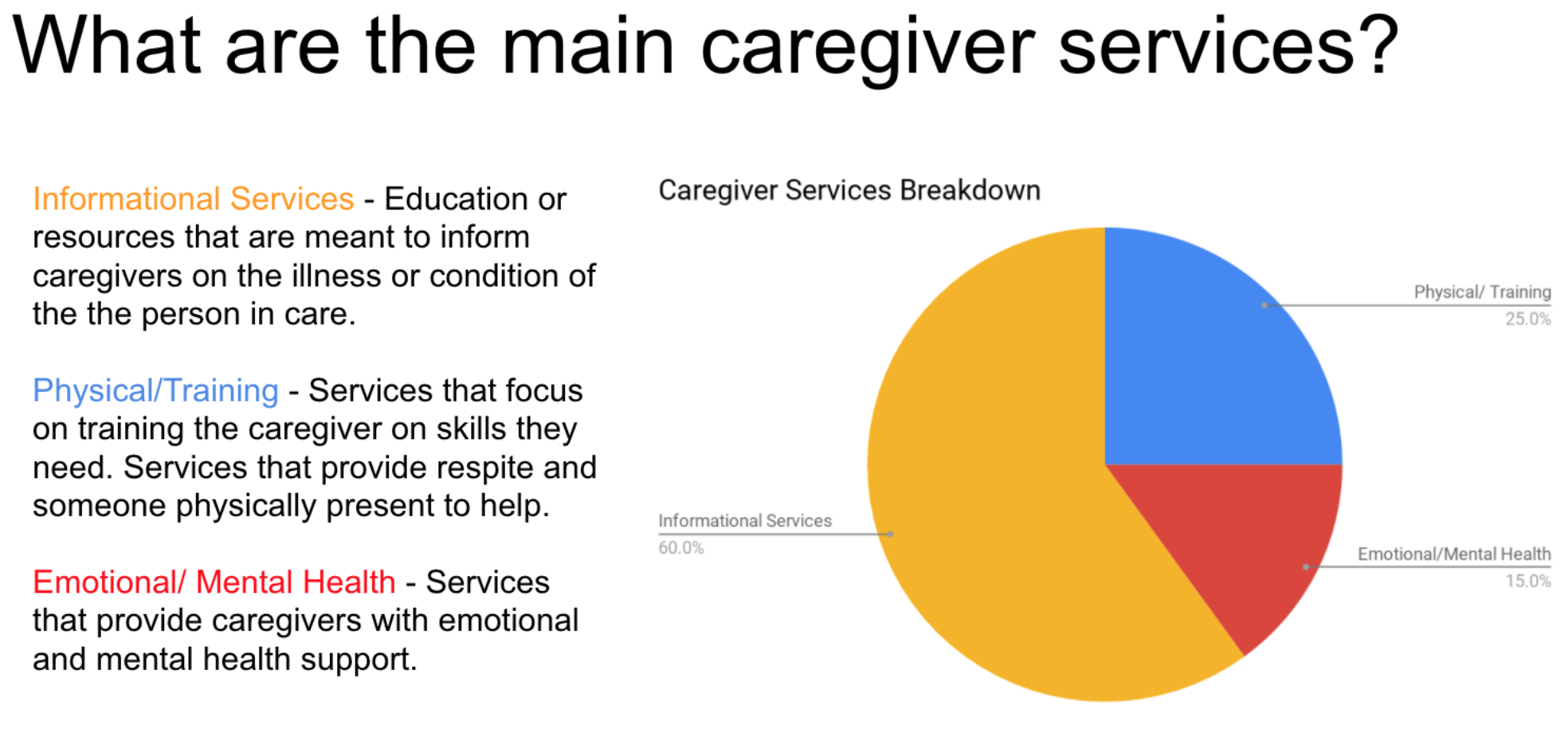
- Caregivers seldom know what services they have available.
- The healthcare system is very difficult for caregivers to navigate due to how disconnected it is.
- Services are generally lacking, with certain kinds of services prioritized over others.
Expert Interviews
Do experts agree with our take on the problems that caregivers are dealing with?
Due to the complexity of the challenges that caregivers face, we were not sure if we had fully grasped the problem and wanted to validate our assumptions. After aligning with the team on the desk research, it was important to make sure our assumptions and findings were in line with experts’ perspectives. The team also wanted to get experts’ sense of potential solutions, to see what was feasible within the healthcare space.
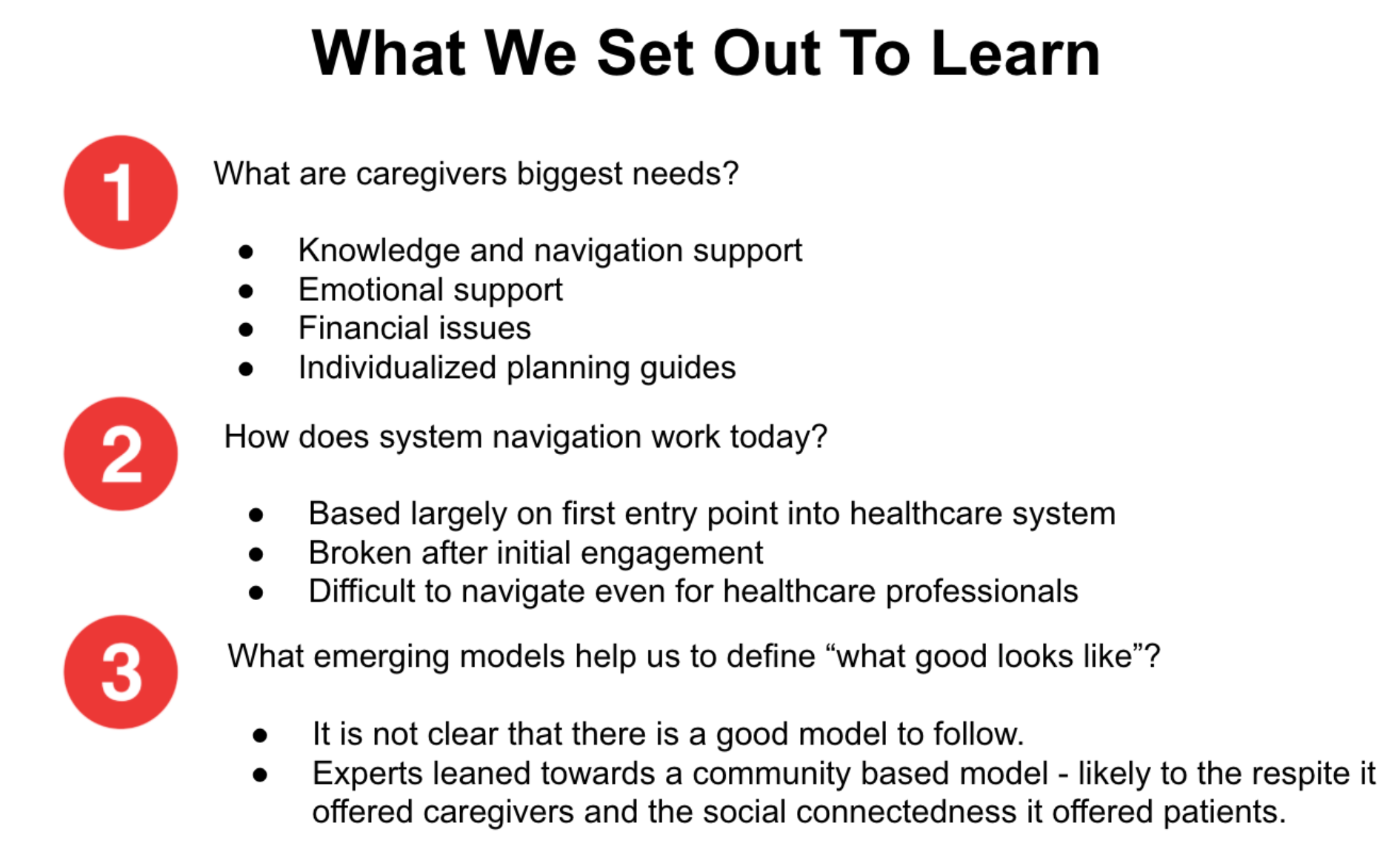
I conducted 6 interviews with various healthcare professionals who specialized in the caregiving space to try to answer the following research questions:
- What do experts think are the entry points into the healthcare system?
- How do experts think caregivers navigate the healthcare system?
- What do experts think are promising potential solutions?
Key Takeaways
- We verified the problem of both lack of knowledge of services and navigation pathways for caregivers.
- There are a lot of hurdles to consider when solving for navigation: services need to be local, need to be up to date (changes frequently), and a lack of standardization.
- Advanced planning, emotional support, and peer connection are the most successful interventions in helping caregivers.
- Two different approaches to consider: Navigation Based Tool vs. Use Case Based Support.
Prototyping Phase — Design Workshop
Transforming our learnings into prototypes.
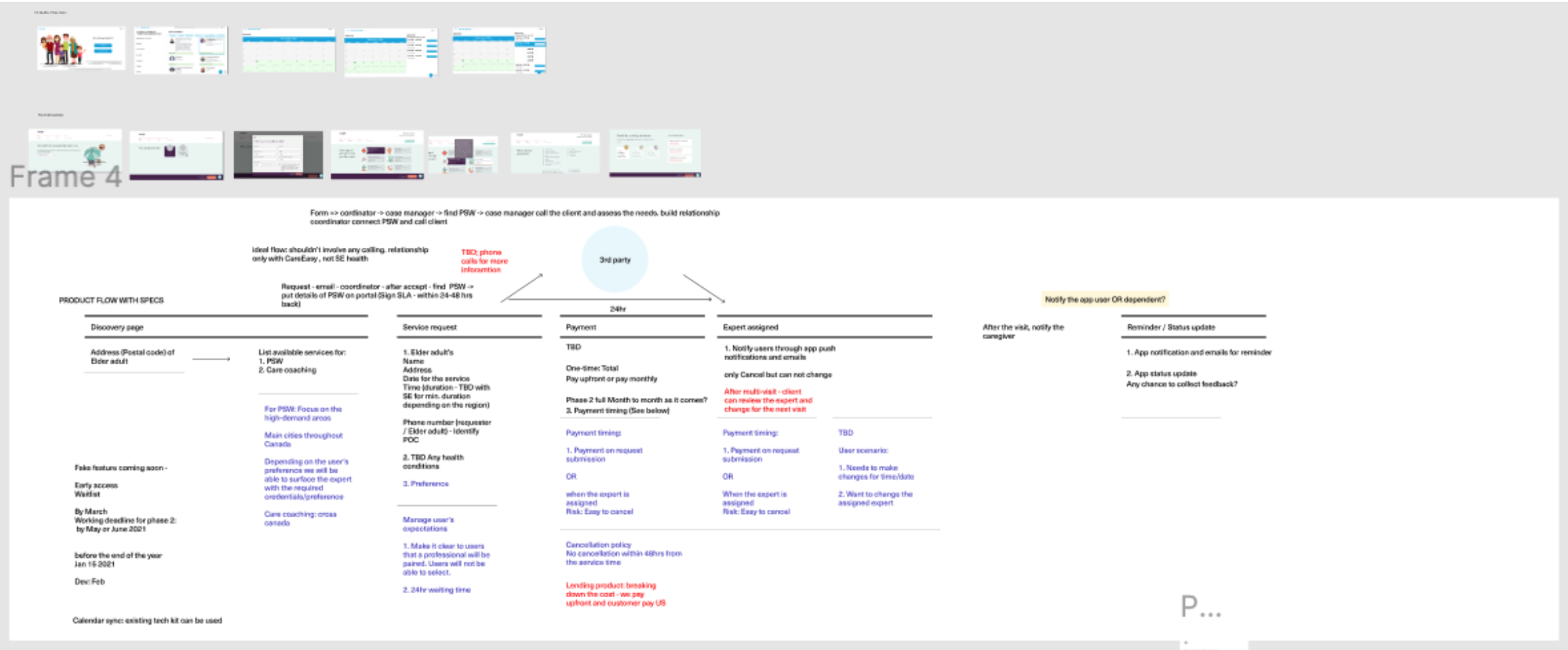
I led an online (remote due to COVID-19) design workshop on Figma with the CareEasy team where we brainstormed different features and opportunities for the app based on our findings thus far. As a team we built out prototypes, as well as thought of different analogs to represent features we could not build out.
Validation Phase — Caregiver Focus Groups
Validation of prototypes with actual caregivers.
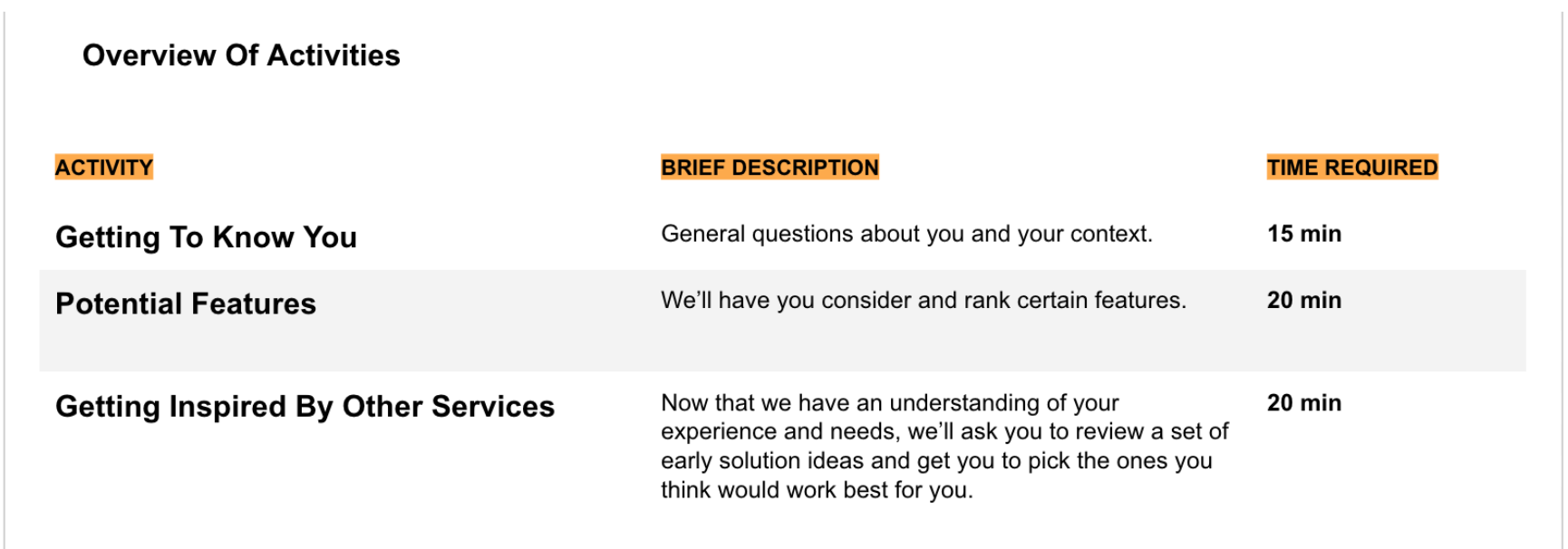
To validate our concepts and determine which had actual value for users, we tested the concepts with actual caregivers. Initially, I was planning to run 9 total interviews with caregivers to test 11 features within the context of CareEasy, along with an evaluation of 6 analog services that were already out there.
Challenge:
We had a lot of material for participants to go through and think about in only 60 minutes. It did not seem like they could possibly give each feature and analog enough thought for us to get robust insight.
Solution: Homework Assignment
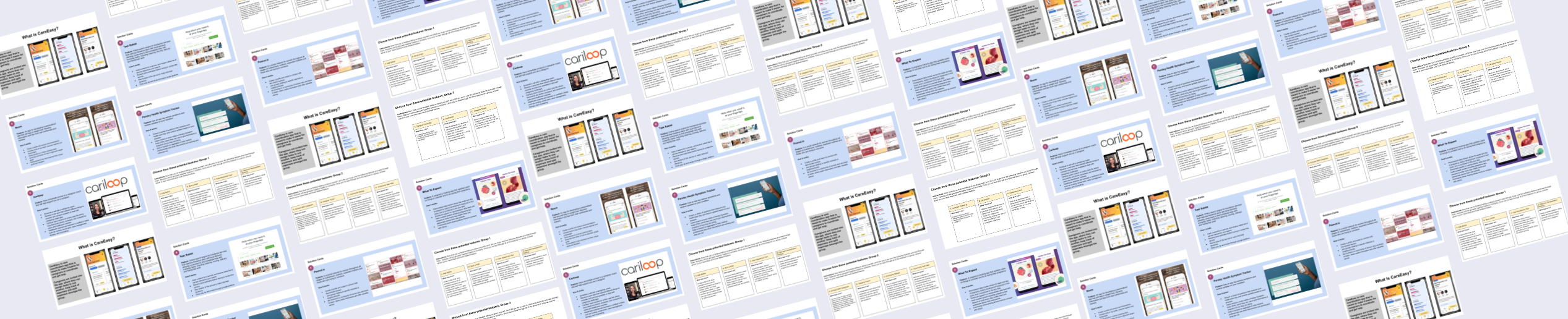
I developed an hour-long homework assignment that each participant was required to complete a couple of days prior to our time with them. This gave participants time to consider each feature and analog at their own pace, while also giving us the opportunity to ask them to imagine their own ideal service for us.
A caregiver focus group on how CareEasy can address challenges in their lives.
Each caregiver situation is different from the next, sometimes drastically so. Therefore, it was important for us to hear how the solutions make sense for some but not others. I led three 60-minute focus groups consisting of 3 caregivers who had done the homework assignment, for a total of 9 participants. The advantage of such a focus group is that it allowed participants to compare and contrast their experiences against each other.
Because everyone had done the homework, minimal time was spent explaining the concepts, and instead the interview focused largely on reviewing the homework. This consisted of their reception of the concepts, the flaws they saw with them, how we might implement them, and if there were any ideas we overlooked.
Format — 60 min total (5 min buffer room):
- 5 min: Introductions and Warm Up
- 30 min: Feature Exploration and Discussion
- 20 min: Analog Exploration and Discussion
Outcomes
Key Takeaways
There were a number of user needs and priorities that were developed. Based on our results, together we fine-tuned the product roadmap and came away with the following 3 key learnings:
- Continue to build on the coordination elements already within the app.
- Become a trusted source of information for users.
- Provide ways to access immediate assistance.
- 4 Happy Stakeholders
- 4 Deliverable Decks
- 1 Fine-Tuned Product Roadmap
- 2 Partner Agreements
The team came away with a clearer understanding of where to focus, and which gaps in the health care system CareEasy was best positioned to address. Working closely with them, we developed a finely tuned product roadmap that prioritized future feature additions. The team was also able to secure partner agreements with the 2 health care providers most relevant to the research.
What Would I Have Done Differently in Retrospect?
Although the stakeholders were very happy with the outcome, and have since regularly engaged with me for more work, I think the approach could have been improved.
The simplest change I would make would be the removal of the analog testing in the focus group. Analog testing is very useful and has served me well in the past, but in the context of caregiving, participants really struggled to imagine how analogs would function. The feature discussion part of the homework was much more valuable, as it was much easier for caregivers to understand and imagine.
Another change I would consider is also having expert interviews following the focus group and fine-tuning of the roadmap. This is simply because it would have been nice to see what experts thought of the direction we decided on. Nonetheless, the team has since developed several relationships with healthcare providers, and I’m sure they will try to get experts to weigh in eventually.